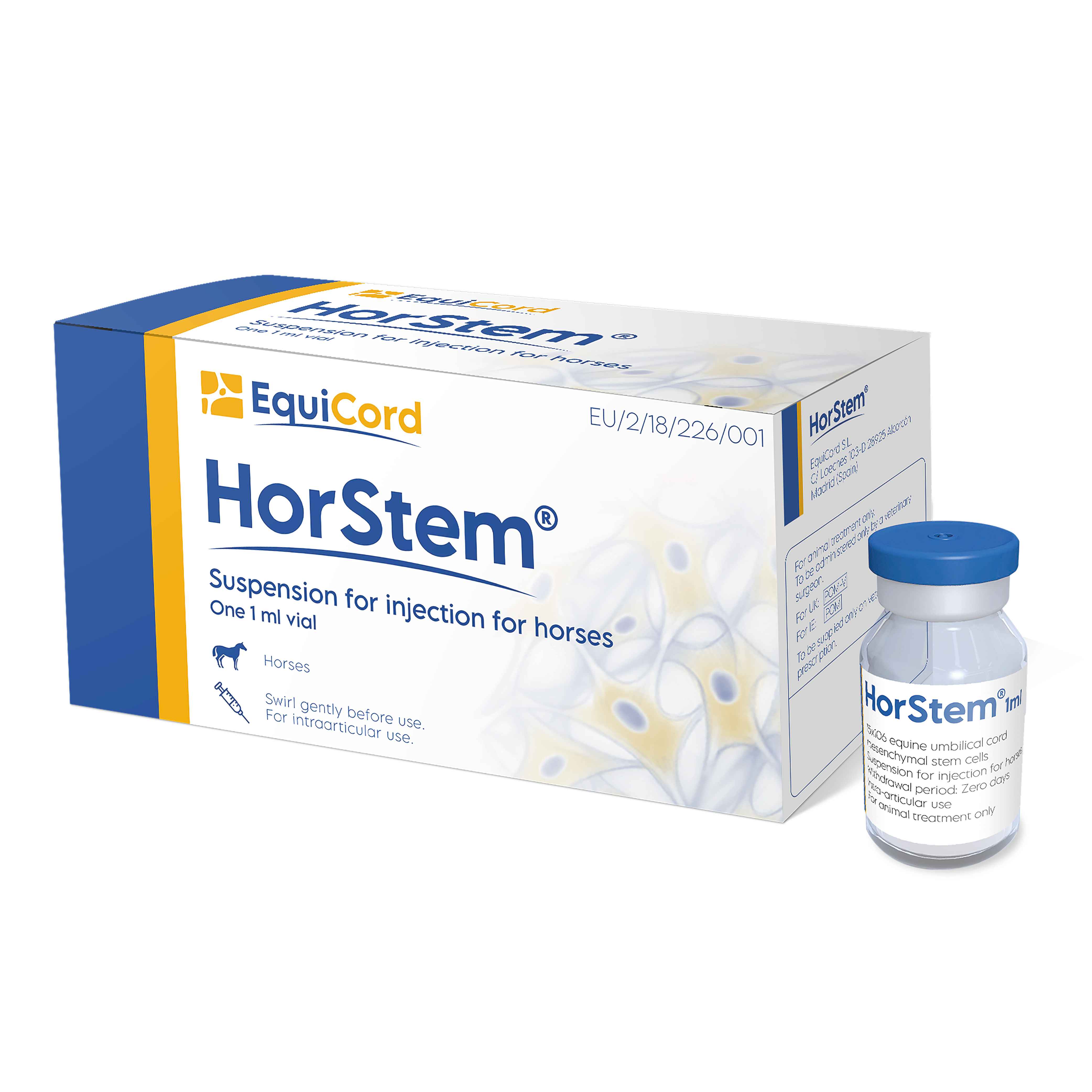
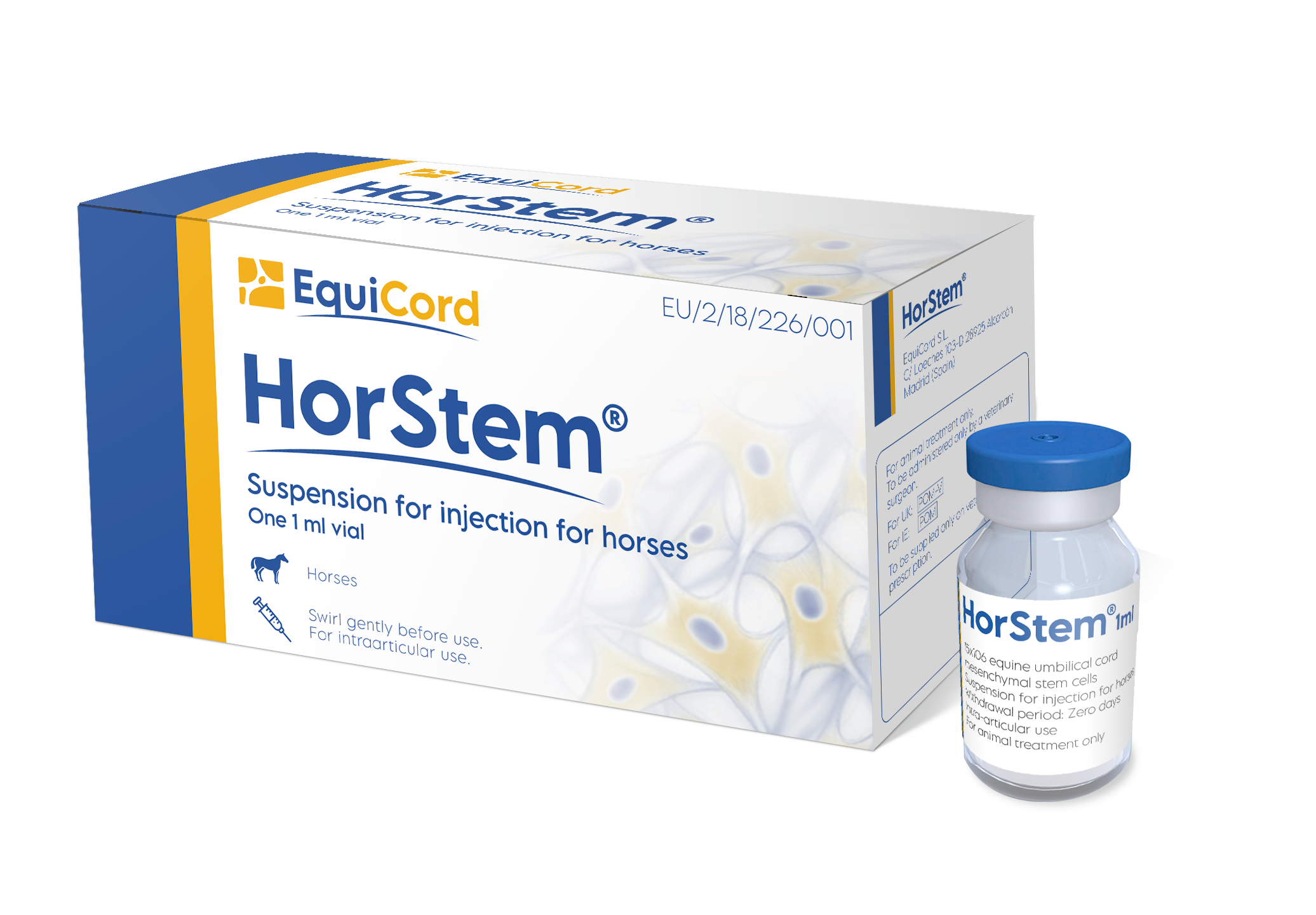
The first and only umbilical cord stem cell product for horses
HorStem is the first and only umbilical cord stem cell product for horses. The use of umbilical cord stem cells presents important advantages.
Umbilical cord stem cells are scientifically recognised for their high versatility and low immunogenicity. The mechanisms of immune privilege are still being investigated; however, low MHC-I level and absence of MHC-II expression protect them from NK-mediated lysis.
The umbilical cord-derived MSCs in HorStem have consistently shown strong MHC-II negativity (<1%) across large donor datasets. Low immunogenicity reduces the risk of local reactions. Additionally, umbilical cord tissue is naturally rich in stem cells, requiring minimal expansion in vitro, which supports consistent product quality and efficient manufacturing.
A ready-to-use stem cell suspension
HorStem is a ready-to-use stem cell product, unlike many stem cell products on the market it requires no handling by the veterinarian prior to administration. Frozen products require a thawing process to be performed in the clinic.
While this may appear straightforward, it is a critical step that can significantly affect treatment outcomes. Improper thawing can lead to substantial cell death, compromising the efficacy of the product.
HorStem eliminates this risk entirely. It arrives ready for use and can be stored in a standard refrigerator at the clinic, without the need for ultra-low temperature equipment or specialised handling. This ensures consistent cell viability and simplifies logistics, making regenerative therapy more accessible and efficient in everyday practice.
Each dose of HorStem contains 15 million active stem cells
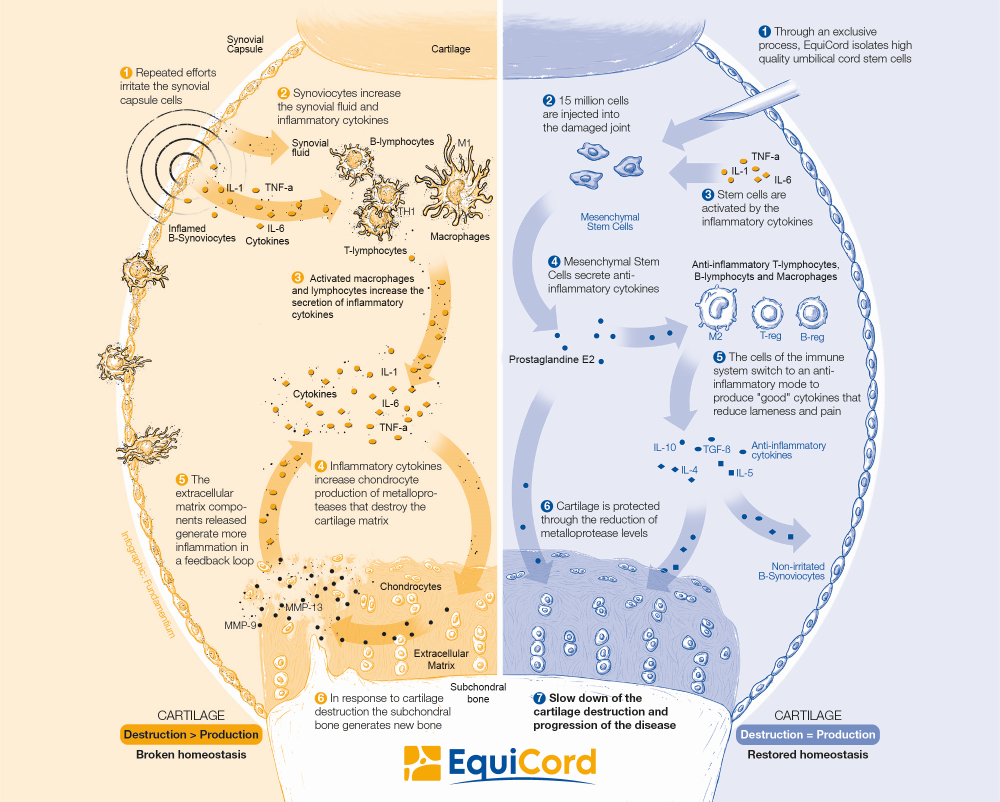
Each dose of HorStem contains 15 million metabolically active mesenchymal stem cells. The therapeutic effect of mesenchymal stem cells (MSCs) is primarily based on their paracrine capacity. Umbilical cord mesenchymal stem cells are activated in the synovium by inflammatory cytokines, in response they secrete anti-inflammatory cytokines such as Prostaglandin E2 (PGE2). Although PE2 is mostly known for its pro-inflammatory influence, it also has an important role in regulating inflammation. It is known as one of the key immunomodulatory cytokines in the body.
Treatment with umbilical cord mesenchymal stem cells in horses with OA inhibits T-cell proliferation and the production of pro-inflammatory cytokines such as TNF-α. It also reduces the presence of matrix metalloproteases (MMP) that cause degradation of the extracellular matrix of cartilage. Studies have shown that these effects are mediated by PGE2. Umbilical cord mesenchymal stem cells also stimulate the production of anti-inflammatory cytokines such as IL-4, IL-5, IL-10 and TGF-β. As the inflammatory response ends and the amount of MMP decreases cartilage destruction and disease progression will stop.
Stem cells create the ideal environment for tissue regeneration. To achieve effective immunomodulation and therapeutic effects , an adequate number of viable stem cells must be present. HorStem delivers a consistent and sufficient dose of stem cells, ensuring that the minimum effective dose is reached regardless of the level of inflammation or the individual immune status of the horse.
Treatment with HorStem results in long term effect
Treatment with HorStem leads to long-term improvement in clinical symptoms of osteoarthritis, including a significant reduction in lameness. This was demonstrated in a multicentric, blinded, placebo-controlled clinical trial. Horses were randomly assigned to receive a treatment with HorStem (N=36) or a placebo containing saline solution (N=39).
Lameness grades, joint effusion and flexion pain were evaluated. Additionally, subjective improvement observed by the veterinarian and the owner were taken into account.
The group treated with HorStem showed a greater reduction in lameness score and pain score compared to the placebo group. In addition, 75% of horses treated with HorStem had lameness scores reduced to an AAEP score of 1 or lower (non-lame or inconsistent lameness) by day 63. The study showed that clinical improvement persisted for more than a year in 84% of the treated horses.
The stem cells are ethically sourced.
The extraction of MSC from the umbilical cord (both tissue and blood) occurs once the animal has been born without manipulation or intervention in the natural process of birth, being a non-invasive tissue extraction. The umbilical cords used in the manufacture of our products come exclusively from high-level stud farms, which must have adequate facilities for the gestation, birth and lactation of our donors, a permanent veterinarian, and a health programme that guarantees the optimal health and welfare of our horses and foals.
HorStem is manufactured to the highest standards for safety and consistency
HorStem is manufactured to the highest standards of safety, consistency, and quality.
To ensure the quality and safety of HorStem, EquiCord carries out extensive testing for more than 30 viruses and protozoa in its cellular products.
Questions?
Do you have any questions or would you like to discuss something personally? Please feel free to contact us at info@grovet.com or through one of our account managers.